
Facets of Transformation: How God Is Working Across Bangladesh
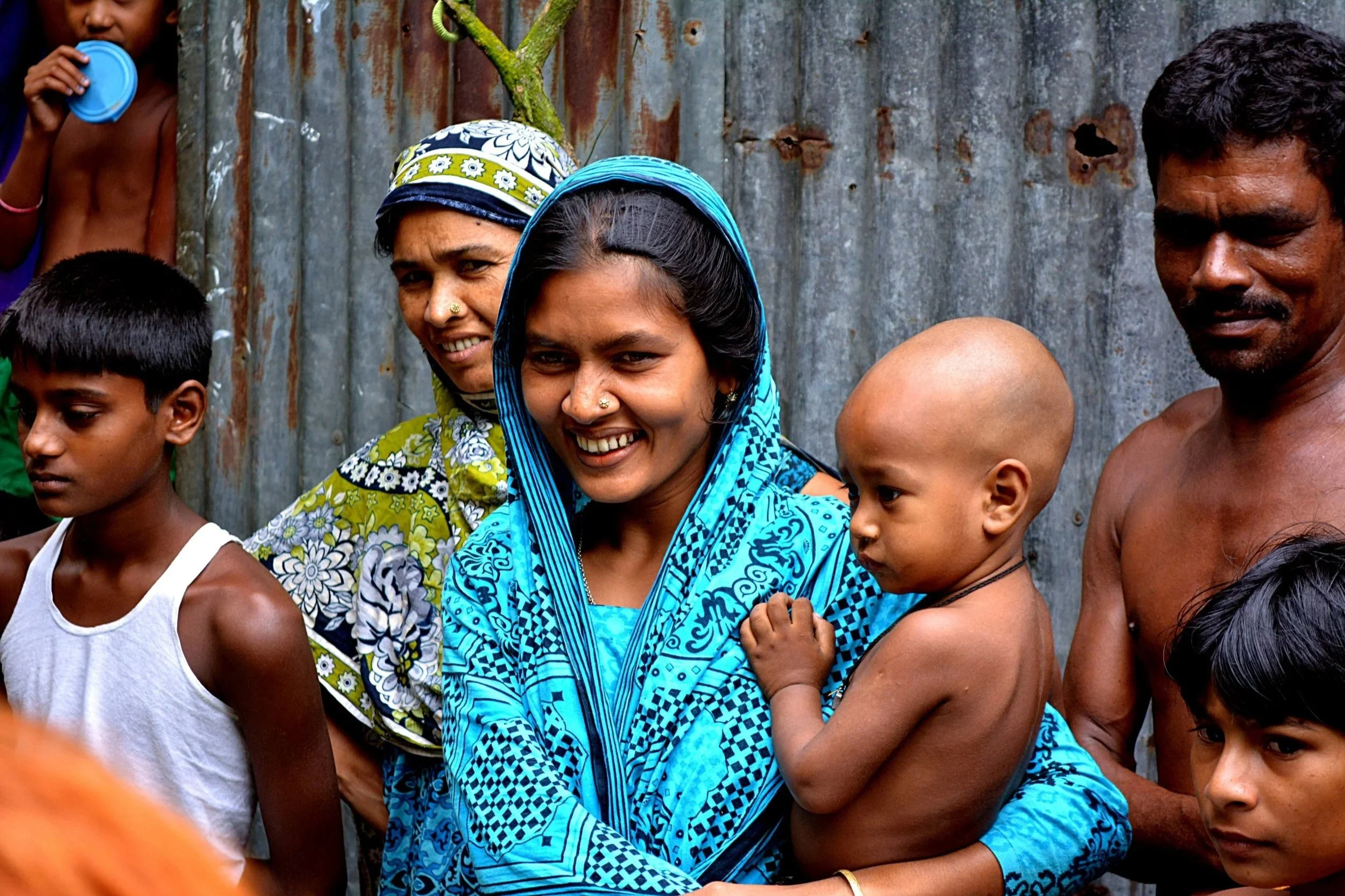
Names, locations, and images have been changed to protect the identity of individuals in sensitive regions.
Across Bangladesh — from urban slums and crowded markets to remote hill communities and tea gardens — God is at work through local believers who are walking faithfully with their neighbors. Through long-term partnership, training, and care groups rooted in Scripture, communities are experiencing spiritual renewal, restored health, and growing economic stability. Together, these stories reveal not isolated moments, but a widening movement of transformation.
Compel International continues to walk hand in hand with local pastors, volunteers, and care group leaders across Bangladesh. Rather than short-term projects, this partnership centers on equipping local believers to serve their own communities — spiritually, physically, and economically — so that Christ-centered, multiplying communities can take root.
Below is a glimpse of what God is doing.
Restored Livelihoods and Growing Stability
In one northern community, a day laborer named Rahim* lost his ability to work when severe knee pain left him unable to carry heavy loads. As the sole provider for his family, the crisis was overwhelming.
Through his wife’s care group, he shared his struggle. The group prayerfully decided to offer him a small loan to purchase a rickshaw van so he could sell vegetables near a bus stand — work that would not strain his injured knee.
Today, he earns between 800–1,000 taka per day. His family’s daily needs are met, debts are being repaid, and stability has returned to their home.
But the change did not stop at income.
He now meets weekly with local volunteers to study Scripture and pray. His family gathers regularly to discuss spiritual matters. A growing desire to see a worshiping community established in their area reflects something deeper than financial improvement — a heart being drawn toward Christ.
Across Bangladesh, similar economic initiatives are strengthening families:
Women in tea garden communities are building savings groups and launching small businesses.
In an urban market, a fish cutter received a small loan to purchase her own equipment, increasing her income and independence.
In rural villages, families have purchased goats, sewing machines, carpentry tools, and rickshaws through care group loans.
In one region alone, six care groups have collectively built a fund exceeding 1.4 million taka, allowing them to help one another during crises.
These initiatives are not relief-based. They are locally led, prayerfully discerned, and sustained by the community itself. As families become more financially stable, their openness to spiritual conversations also deepens.
Healing in Jesus’ Name
Throughout multiple regions, believers are praying boldly for healing — and many are testifying to answered prayer.
In one Muslim-background family, a husband had been learning about Jesus for several years. When his wife suffered from a severe uterine tumor, the family and local church leaders prayed persistently.
Over time, her condition resolved in a way they believe only God could have accomplished.
“We believe this was possible only because we prayed to Jesus.”
Their faith has grown steadily, and the family is now preparing for baptism, even amid a challenging religious environment.
Elsewhere:
Women suffering from chronic knee and stomach pain testify to complete recovery after prayer.
A woman long affected by leprosy reports significant healing following months of intercession.
A young girl who had been bedridden regained her strength after church members gathered to pray.
Members facing emergency medical crises received both financial assistance and prayer support from their care groups.
Physical healing has opened doors for entire families — and sometimes entire neighborhoods — to seek prayer and hear the gospel.
As James 5:16 reminds us, “The prayer of a righteous person is powerful and effective” (NIV).
Health Knowledge That Protects Families
Transformation is also taking place through practical health training rooted in dignity and local leadership.
In several urban and rural communities:
Families have learned about newborn care, exclusive breastfeeding, and child nutrition.
Women are teaching neighbors not to stop breastfeeding when a child is sick.
Communities are washing food thoroughly, wearing sandals to prevent parasites, and improving sanitation practices.
Families are drinking safe water and reporting reduced stomach illnesses.
One women’s group shared that husbands have stopped smoking around their children after learning about health risks. Others now educate neighbors about hygiene and disease prevention.
This growing health awareness reflects not outside control, but empowered communities taking responsibility for their own well-being.
New Leaders and Expanding Ministry
Across Bangladesh, leadership is multiplying.
New women’s groups have formed with dozens of members contributing weekly savings.
Four new women leaders were trained in one region last quarter alone.
Monthly Bible discussion groups are functioning as primary spiritual communities in several villages.
In one hill region among Buddhist tribal communities, new care groups and a small school have begun, with a local teacher receiving ongoing Bible training.
In that hill community of just 15 families, a cell fellowship now meets weekly. Parents and children are hearing Bible stories, learning songs about Jesus, and growing in understanding.
“We are now able to know the truth for ourselves.”
Local pastors and volunteers regularly visit these areas, offering teaching, encouragement, and prayer. These relationships are long-term and deeply rooted.
Baptisms and Spiritual Renewal
Perhaps most encouraging is the visible spiritual fruit emerging across regions.
In one area, 12 people were baptized following a revival gathering attended by believers from remote hill communities.
In a Dhaka discipleship seminar, 12 individuals confessed faith in Christ and began active involvement in the local church.
During Christmas celebrations across multiple communities, over 2000 people heard the gospel clearly presented, with many responding in faith.
Several Muslim-background families are preparing for baptism as they continue growing in discipleship.
Rather than isolated conversions, these stories reflect ongoing discipleship — believers attending church faithfully, inviting others, serving in ministry roles, and forming new cell groups.
As Jesus said, “I am building my church” (Matthew 16:18, NIV). In Bangladesh, we are witnessing that promise unfold.
A Growing Movement
From crowded railway-side settlements to tea garden communities, from Buddhist hill tribes to Muslim-background families, God is drawing people to Himself.
Care groups are strengthening families economically.
Health sessions are protecting children.
Prayer is bringing healing.
Scripture discussions are multiplying.
Baptisms are taking place.
New leaders are emerging.
And through it all, local believers are leading.
Compel International remains committed to walking alongside these pastors, volunteers, and community leaders — equipping them for long-term, sustainable ministry in places where the gospel is still taking root.
Please pray:
For families preparing for baptism amid social pressure
For continued physical healing and protection
For new leaders to grow in courage and wisdom
For communities to become Christ-centered and multiplying
The work in Bangladesh is not defined by one story, but by many lives — woven together — testifying that God is faithfully transforming communities, one relationship at a time.